
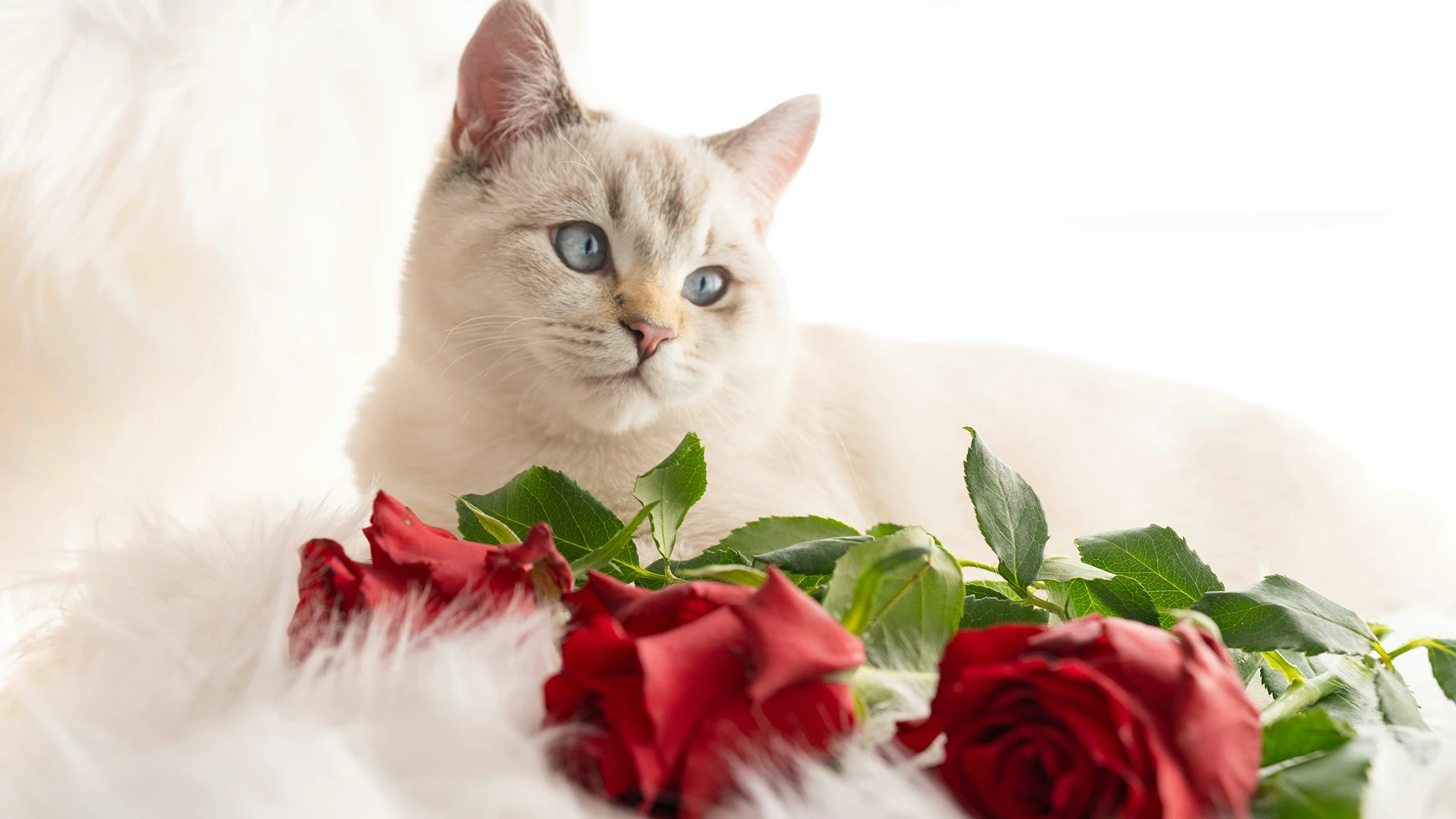
Cats love to explore their homes. They often smell flowers, chew leaves, and play with anything they find interesting. However, some plants can harm cats. Therefore, many pet owners ask an important question: are roses toxic to cats?
The good news is that real roses are generally non-toxic to cats. This means that the rose plant itself does not contain substances known to poison cats. However, that does not mean every part of a rose bouquet is completely safe.
For example, rose thorns can hurt your cat. Also, chemicals, pesticides, and flower food may cause health problems. Therefore, you should take a few simple steps before bringing roses into your home.
In this guide, we will explain everything you need to know about roses and cats. You will learn about rose petals, leaves, stems, possible dangers, symptoms to watch for, and ways to keep your furry friend safe.
Are Roses Toxic to Cats?
No, true roses are generally not toxic to cats. They belong to the Rosa plant family. According to common veterinary plant safety guidance, roses do not contain the toxic compounds found in many dangerous houseplants.
This means your cat can usually stay in a home with real roses. However, you should still prevent your pet from chewing large amounts of the plant.
Although roses are non-toxic, eating them can sometimes upset your cat’s stomach. For example, a cat that eats several petals may experience vomiting or mild diarrhea.
Here are some important facts about roses and cats:
- Real roses are generally non-toxic.
- Rose petals do not contain a known cat poison.
- Rose leaves are generally safe in small amounts.
- Rose stems can contain sharp thorns.
- Pesticides may make roses dangerous.
- Flower food can contain harmful ingredients.
So, if you are wondering, are roses toxic to cats, the simple answer is no. However, you should understand the possible risks before allowing your cat near a flower arrangement.
Why Do Cats Like Roses?
Cats are naturally curious animals. They enjoy exploring new objects and smells. When you bring fresh roses home, your cat may become interested in them.
The bright colors and fresh smell can attract your furry friend. Some cats may also enjoy touching the petals with their paws.
However, cats do not always understand which objects are safe. They may chew a flower simply because it looks interesting.
There are several reasons why cats may show interest in roses.
Roses Have Interesting Smells
Cats have a strong sense of smell. They use their noses to understand the world around them.
Fresh roses produce a pleasant smell. Some cats may enjoy investigating this new scent.
However, not every cat reacts in the same way. Some cats may ignore flowers completely, while others may spend several minutes smelling them.
Cats Enjoy Playing With Moving Petals
Rose petals can move when air passes through a room. This movement may attract a playful cat.
Your cat might touch the petals, pull them from the flower, or knock over the vase.
This behavior is usually related to curiosity and play. Still, you should watch your pet to prevent accidental injuries.
Some Cats Like Chewing Plants
Many cats chew grass and other plants. Experts believe this behavior can have several causes, including natural curiosity and interest in plant textures.
Therefore, your cat might try to chew rose leaves or petals.
Although real roses are generally safe, eating too much plant material may cause digestive discomfort.
Are Rose Petals Safe for Cats?
Yes, real rose petals are generally non-toxic to cats. A small amount of fresh rose petals should not poison your pet.
However, you should not encourage your cat to eat them. Cats need balanced cat food, not flowers, to stay healthy.
Rose petals can also carry dirt, insects, or chemical products. Therefore, you should avoid giving your cat petals from an unknown source.
Consider these simple safety tips:
- Keep fresh rose petals away from your cat’s food.
- Do not allow your cat to eat large amounts.
- Avoid petals treated with pesticides.
- Remove fallen petals from the floor.
- Watch your cat around flower arrangements.
If your cat eats one or two clean rose petals, there is usually no reason to panic. However, contact your veterinarian if your pet develops unusual symptoms.
Are Rose Leaves Toxic to Cats?
Rose leaves are generally non-toxic to cats. They do not contain a known poison that makes roses dangerous to pets.
However, leaves can carry pesticides and other chemicals. These substances may cause problems if your cat chews or swallows them.
Additionally, leaves can be difficult for some cats to digest. Eating too many may lead to stomach discomfort.
You should take a few precautions when keeping roses indoors.
First, choose roses from a trusted source. Next, ask whether the flowers received pesticide treatments. Finally, keep the plant somewhere your cat cannot chew it.
Remember that non-toxic does not mean edible. Your cat should still get most of its nutrition from proper cat food.
Are Rose Stems Dangerous for Cats?
Rose stems are not usually poisonous. However, they can create a physical danger because many rose varieties have sharp thorns.
A curious cat may rub against a stem or try to bite it. As a result, a thorn could scratch its mouth, paws, nose, or skin.
A small scratch may cause pain and irritation. A deeper injury may need veterinary attention.
Here are some ways to reduce this risk:
- Remove roses with sharp thorns before arranging them.
- Keep flower stems away from your cat.
- Do not leave broken stems on the floor.
- Check your cat for scratches after an accident.
- Place flower arrangements in a secure location.
You should also remember that removing thorns does not make every rose arrangement completely safe. Chemical treatments and vase water can still create risks.
Can Cats Get Sick From Eating Roses?
Real roses are generally safe, but eating large amounts can upset a cat’s stomach.
For example, your cat may chew several leaves or petals while playing. The extra plant material may irritate its digestive system.
Some cats have more sensitive stomachs than others. Therefore, even a small amount of plant material may cause mild discomfort.
Possible signs include:
- Vomiting
- Mild diarrhea
- Drooling
- Reduced appetite
- Temporary stomach discomfort
These symptoms do not automatically mean rose poisoning. They can happen for several reasons.
If your cat shows repeated vomiting, severe diarrhea, weakness, or unusual behavior, contact a veterinarian. Do not wait for the symptoms to become worse.
Are Different Types of Roses Safe for Cats?
There are many types of roses. They come in different colors, shapes, sizes, and scents.
Fortunately, true roses are generally considered non-toxic to cats. This includes many popular garden and decorative varieties.
However, you should make sure that the flower is actually a rose. Some plants have rose-like names but belong to different plant families.
Here are some common types of roses.
Red Roses
Red rose closeup. Fresh blooming petals. Romantic love flower. Nature beauty in detail. Floral texture background.
Red roses are popular gifts for birthdays, anniversaries, and special events.
The petals of true red roses are generally non-toxic to cats. Therefore, having them in your home is usually not a poisoning concern.
Still, you should remove sharp thorns and keep the bouquet away from curious pets.
White Roses
A Wrapped 100 Flowers Fresh White Roses Bouquet – Murukali.com
White roses often represent peace, love, and beauty. People commonly use them for weddings and home decorations.
Like other true roses, white roses are generally non-toxic to cats.
However, check the bouquet for decorative products, chemical sprays, and other flowers that may be toxic.
Pink Roses
Beautiful pink roses blooming in the garden.
Pink roses are known for their soft colors and sweet appearance. Many people use them to decorate bedrooms and living rooms.
They are also generally non-toxic to cats.
Nevertheless, you should prevent your cat from chewing the flowers. This helps reduce the risk of stomach irritation and accidental injuries.
Yellow Roses
Close-up image of yellow rose bouquet
Yellow roses often represent friendship and happiness. Their bright color can make any room look cheerful.
Fortunately, true yellow roses are generally safe around cats.
However, the same precautions apply. Keep the flowers away from your cat and check for harmful chemical treatments.
Miniature Roses
Rosier – Livraison de plantes et de bouquets de fleurs en direct de la production – Les Fleurs de Nicolas
Miniature roses are small plants with beautiful flowers. People often grow them in pots or use them as table decorations.
These roses are also generally non-toxic to cats.
However, miniature plants may be easier for cats to reach. Therefore, place the pot somewhere your pet cannot chew the leaves or dig through the soil.
What Happens If a Cat Eats a Rose?
Most cats that eat a small amount of a real rose do not experience serious problems.
However, the result can depend on the amount eaten, the cat’s health, and whether the flower contains chemicals.
For example, a cat that eats one clean petal may remain completely normal. On the other hand, a cat that eats many leaves may develop an upset stomach.
You should follow these steps if your cat eats a rose.
Remove the Remaining Flowers
First, move the rose bouquet away from your cat.
Remove any loose petals or leaves from the floor. This prevents your pet from eating more plant material.
Check What Your Cat Ate
Try to understand which part of the rose your cat swallowed.
Did your cat eat petals, leaves, or a piece of the stem? Also, check whether the flowers received pesticide treatment.
This information can help your veterinarian understand the situation.
Watch for Unusual Symptoms
Observe your cat for changes in behavior.
Check whether your pet is eating, drinking, walking, and acting normally.
Look for vomiting, diarrhea, drooling, or signs of pain. If anything seems unusual, contact your veterinarian.
Contact Your Veterinarian When Needed
If your cat ate a large amount of flowers or you suspect chemical exposure, ask your veterinarian for advice.
Do not try to make your cat vomit at home. Also, avoid giving human medicines without veterinary instructions.
Quick advice can help protect your pet from further problems.
Can Rose Water Harm Cats?
Rose water is different from a fresh rose. It is a liquid product made using rose extracts or rose petals.
Some rose water products contain only water and rose-derived ingredients. Others may contain perfume, alcohol, preservatives, or additional chemicals.
Therefore, you should not assume every rose water product is safe for cats.
Cats may lick liquids from their fur, paws, or nearby surfaces. This can increase the chance of accidental exposure.
Keep these products away from your pet:
- Perfumed rose water
- Rose sprays
- Artificial fragrance products
- Rose essential oil mixtures
- Cosmetic products containing rose extracts
If your cat licks rose water, check the product label. Contact your veterinarian if it contains alcohol, essential oils, or unknown ingredients.
Are Rose Essential Oils Safe for Cats?
You should be much more careful with rose essential oils than with fresh roses.
Essential oils are highly concentrated products. They contain powerful plant compounds that can cause problems for cats.
Cats have special ways of processing chemicals. Some substances found in essential oils can be harmful to them.
Therefore, avoid applying rose essential oil directly to your cat’s skin or fur.
You should also avoid using essential oil diffusers around cats without veterinary advice. Oil droplets may settle on surfaces or your cat’s coat.
Possible warning signs of essential oil exposure include:
- Drooling
- Vomiting
- Weakness
- Trembling
- Difficulty breathing
- Unusual behavior
If you suspect exposure, contact a veterinarian or animal poison service immediately.
Are Roses Safe for Cats If They Have Pesticides?
Fresh roses may be non-toxic, but pesticides can change the situation.
Some flower growers use chemicals to protect plants from insects and diseases. These products may remain on petals, leaves, and stems.
If your cat chews treated flowers, it may swallow harmful chemicals.
Therefore, you should ask the flower seller about pesticide use before bringing roses home.
Here are some useful tips:
- Buy flowers from a trusted seller.
- Ask whether the roses received chemical treatments.
- Avoid flowers with unknown sprays.
- Keep treated flowers away from pets.
- Never assume washing removes every chemical.
Even organic flowers are not automatically safe to eat. You should still keep them away from your cat.
Can Rose Vase Water Make Cats Sick?
Yes, rose vase water can create a risk for cats.
Cats sometimes drink water from unusual places. They may find a flower vase more interesting than their normal water bowl.
However, vase water can contain bacteria, plant material, and flower food.
Many flower food products contain ingredients that are not meant for pets. Some arrangements may also include preservatives or other additives.
Therefore, never allow your cat to drink from a flower vase.
You can follow these simple steps:
- Use a stable vase.
- Keep the vase in a restricted area.
- Clean spilled water immediately.
- Do not add flower food where cats can reach it.
- Give your cat fresh drinking water.
If your cat drinks treated vase water, check the product ingredients and contact your veterinarian for advice.
Which Flowers Are More Dangerous Than Roses for Cats?
Although roses are generally safe, many other flowers can harm cats.
Some popular decorative plants contain toxic substances. Others can cause serious illness after a cat chews their leaves or petals.
The most important example is the true lily.
Close up of a Lilium longiflorum
Here are some flowers that cat owners should know about.
Lilies
True lilies, including Easter lilies, tiger lilies, and Asiatic lilies, are extremely dangerous to cats.
Even small exposures can cause severe kidney damage. Pollen, leaves, petals, and vase water can all create serious risks.
If your cat touches or eats a true lily, seek emergency veterinary care immediately. Do not wait for symptoms.
Tulips
Tulips contain substances that can irritate a cat’s digestive system.
The bulbs contain higher amounts of these compounds. Eating them may cause vomiting, diarrhea, and drooling.
Therefore, keep tulips away from your cat.
Daffodils
Daffodils contain toxic substances that can cause health problems.
The bulbs are especially dangerous. Cats that eat daffodils may experience vomiting, diarrhea, and other symptoms.
Keep these flowers outside your pet’s reach.
Hyacinths
Hyacinths can also cause irritation and digestive problems.
Their bulbs contain higher concentrations of harmful substances. Therefore, avoid keeping them where your cat can dig or chew.
Chrysanthemums
Chrysanthemums contain compounds that can cause problems in cats.
A cat that eats them may develop vomiting, diarrhea, drooling, or loss of coordination.
If you have these flowers, keep them away from your pet.
How to Keep Roses Safe Around Cats
You do not have to stop enjoying beautiful flowers just because you have a cat.
Instead, you can make a few changes to your home. These steps can reduce the chance of accidental eating and injuries.
Place Roses in a Safe Location
Put your rose bouquet somewhere your cat cannot easily reach.
A high shelf may seem like a good idea. However, cats can jump onto many surfaces.
Therefore, choose a secure room or location that your cat cannot access.
Remove Sharp Thorns
Before arranging your roses, remove sharp thorns carefully.
This can reduce the risk of scratches and injuries.
However, keep your hands protected while handling the stems.
Avoid Chemical Treatments
Choose flowers that have not received harmful pesticides or sprays.
Ask the seller about the products used on the flowers.
If you cannot confirm their safety, keep the arrangement away from your cat.
Use a Stable Vase
Some cats enjoy pushing objects off tables.
A heavy, stable vase can reduce the chance of accidental spills.
Also, place it somewhere your cat cannot easily knock it over.
Clean Fallen Petals
Remove loose petals and leaves from the floor.
Cats may play with them or try to chew them.
Cleaning your home regularly can reduce this risk.
Provide Safe Cat Toys
Cats need activities that keep them busy.
Give your pet toys, scratching posts, and safe play areas. This may reduce interest in your flowers.
You can also provide cat grass from a trusted pet supplier.
What Are the Signs of Flower Poisoning in Cats?
Roses themselves are generally non-toxic. However, chemicals or dangerous flowers may cause poisoning.
Therefore, cat owners should recognize common warning signs.
Symptoms can vary depending on the substance and the amount swallowed.
Look for these possible signs:
- Repeated vomiting
- Diarrhea
- Excessive drooling
- Loss of appetite
- Weakness
- Unusual tiredness
- Trembling
- Difficulty breathing
- Changes in walking or balance
Some plants cause symptoms quickly. Others may cause delayed problems.
Remember that true lily exposure requires immediate veterinary attention, even if your cat looks healthy.
If your cat has difficulty breathing, collapses, or shows severe weakness, seek emergency care.
When Should You Take Your Cat to the Vet?
You should contact your veterinarian whenever you suspect your cat has eaten a dangerous plant or chemical.
Even if roses are generally safe, other parts of a bouquet may create risks.
For example, a flower arrangement may contain lilies, decorative leaves, pesticides, or treated water.
A veterinarian can help you understand whether your cat needs treatment.
Seek veterinary advice if:
- Your cat eats an unknown flower.
- Your cat chews a chemically treated rose.
- Your cat drinks flower food.
- Your cat develops repeated vomiting.
- Your cat has severe diarrhea.
- Your cat shows unusual weakness.
- Your cat has a thorn injury.
Do not wait for serious symptoms if you suspect exposure to a highly toxic plant.
Also, keep a picture of the flower or its packaging. This can help your veterinarian identify the possible danger.
Are Roses Safe for Kittens?
Real roses are generally non-toxic to adult cats and kittens.
However, kittens need extra supervision. They are often more playful and curious than older cats.
A kitten may chew petals, pull leaves, or play with sharp stems.
Because kittens are small, eating plant material may also cause digestive discomfort.
You should take extra care when keeping flowers around young cats.
Here are some helpful precautions:
- Keep flower arrangements in restricted areas.
- Remove loose petals immediately.
- Avoid sharp thorns.
- Keep vase water covered or inaccessible.
- Provide safe toys for play.
- Watch your kitten around new objects.
It is always better to prevent accidents than to deal with an emergency later.
Are Artificial Roses Safe for Cats?
Artificial roses do not contain the natural plant compounds found in fresh flowers. However, they can still create problems.
Some artificial flowers contain plastic, fabric, wire, or small decorative pieces.
A playful cat may chew these materials or swallow small parts.
This can cause choking or digestive blockage.
Therefore, artificial roses are not automatically safe.
Choose decorations without loose pieces or sharp wires. Also, keep them away from cats that enjoy chewing household objects.
If your cat swallows a piece of artificial flower, contact your veterinarian for advice.
Can You Keep a Rose Garden If You Own Cats?
Yes, you can usually grow real roses in a garden with cats.
Roses are generally non-toxic, so they are not among the main plant poisoning concerns for cats.
However, you should think about the other things used in your garden.
For example, fertilizers, weed killers, pesticides, and insect treatments may create risks.
You should also consider sharp thorns. Cats that explore garden plants may scratch their paws or faces.
Follow these gardening tips:
- Avoid harmful chemical treatments.
- Store fertilizers in secure containers.
- Remove fallen stems and sharp branches.
- Check your cat after outdoor adventures.
- Keep dangerous plants away from your garden.
- Ask your veterinarian about pet-safe gardening products.
With a little care, you can enjoy a beautiful rose garden while protecting your furry friend.
FAQS
1. Are roses toxic to cats?
No, real roses are generally non-toxic to cats. However, thorns, pesticides, and flower food can create risks. Therefore, keep roses away from curious pets.
2. What happens if my cat eats a rose petal?
Eating a small amount of a clean rose petal usually does not cause serious problems. However, eating too much plant material may cause vomiting or mild stomach discomfort.
3. Are red roses poisonous to cats?
No, true red roses are generally non-toxic to cats. Still, you should remove sharp thorns and avoid flowers treated with unknown chemicals.
4. Can cats drink rose vase water?
Cats should not drink rose vase water. It may contain bacteria, flower food, or preservatives. Give your cat fresh drinking water instead.
5. What flowers are poisonous to cats?
True lilies are extremely dangerous to cats. Other risky flowers include tulips, daffodils, hyacinths, and chrysanthemums. Always check a plant’s safety before bringing it home.
Conclusion
So, are roses toxic to cats? The answer is no. Real roses are generally non-toxic and are usually safe to have in homes with cats.
However, you should still take a few precautions. Rose thorns can cause injuries, and pesticides or flower food may create health problems.
Keep your flowers in a safe place. Remove loose petals, use a stable vase, and prevent your cat from drinking vase water.
Most importantly, learn which flowers are dangerous. True lilies can cause severe kidney damage in cats and require immediate veterinary attention.
With proper care, you can enjoy beautiful roses while keeping your furry friend happy and safe.
