
Technology is changing the way people work, learn, and do business. Today, many companies use cloud computing to store data, run websites, and manage applications. Amazon Web Services, also known as AWS, is one of the leading cloud platforms. It offers many tools that help businesses work faster and more safely.
AWS certifications help people show their knowledge of cloud computing. These certifications come from Amazon Web Services. They cover different skills, such as cloud basics, software development, security, networking, and machine learning. As a result, students and professionals can choose a certification that matches their goals.
Moreover, AWS certifications can help you build a clear learning path. You do not need to know everything before you start. Some exams suit beginners, while others require technical experience. Therefore, you can start with basic concepts and improve your skills over time.
If you want to enter the technology field, learning about AWS can be a smart step. However, a certificate alone does not guarantee a job. You should also practice real tasks, build projects, and learn how cloud systems work. Together, these steps can help you prepare for new career opportunities.
What Are AWS Certifications?
AWS certifications are professional credentials that show your knowledge of Amazon Web Services. You earn a certification by passing the required exam. Each exam tests specific skills and knowledge related to cloud technology.
For example, one exam may test your understanding of cloud computing. Another may focus on building applications or protecting cloud systems. Because each certification has a different purpose, you should choose one that matches your experience and career plans.
AWS certifications also help employers understand your skills. When a hiring manager sees a relevant certification, they can recognize that you have studied certain cloud topics. Still, employers may also check your experience, communication skills, and practical knowledge.
Why Do AWS Certifications Matter?
Cloud computing supports many modern services. Businesses use it to host websites, store files, process information, and run applications. Consequently, companies need people who understand cloud tools and services.
AWS certifications give learners a structured way to study these topics. Instead of learning random facts, you can follow a clear exam guide. You can also use practice questions and hands-on exercises to improve your understanding.
In addition, these credentials can help you explain your skills during a job interview. They may strengthen your resume when you apply for cloud-related positions. However, your projects and work experience remain important parts of your professional profile.
Types of AWS Certifications
AWS offers certifications for different skill levels and technical roles. The best choice depends on what you already know and what you want to do next.
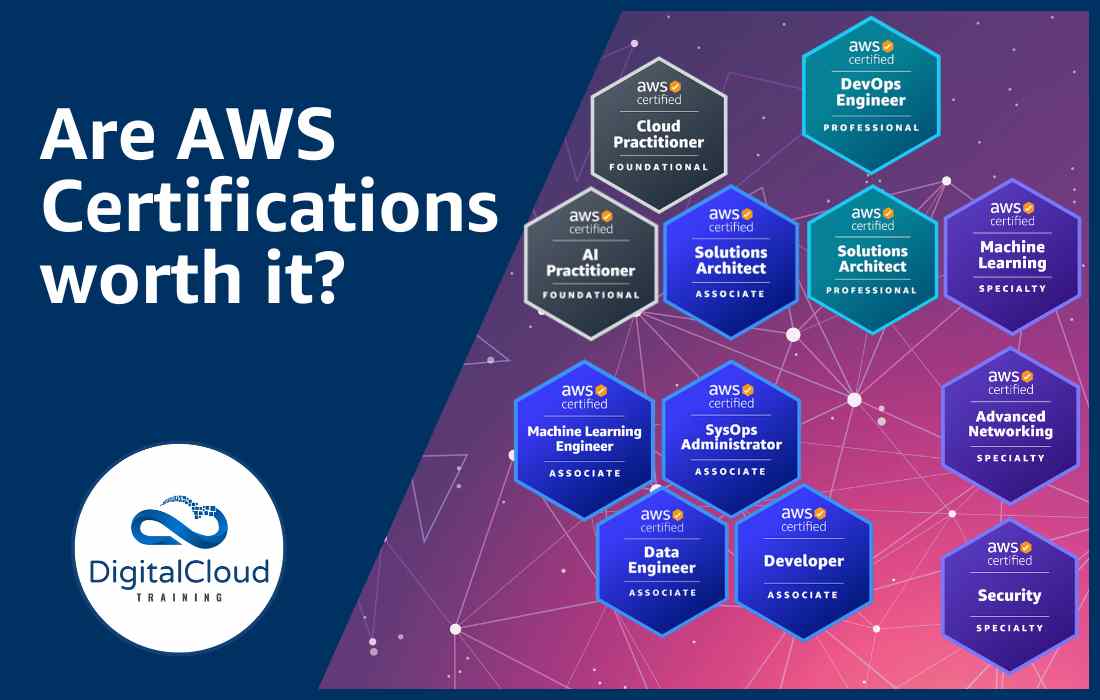
The main certification levels include Foundational, Associate, Professional, and Specialty. Each level serves a different purpose. You do not always need to complete every level in order, so review the exam requirements before choosing your path.
1. Foundational AWS Certifications
Foundational certifications introduce cloud computing and basic AWS services. They suit people who want to understand the platform before studying advanced technical topics.
The AWS Certified Cloud Practitioner is a well-known example. It covers cloud concepts, basic security, pricing, billing, and common AWS services. It can help beginners understand how cloud computing supports businesses.
You may find this level useful if you are a student, manager, business professional, or career changer. Although technical experience can help, you can prepare for this exam without being an experienced cloud engineer.
2. Associate AWS Certifications
Associate certifications test more practical knowledge. They suit learners who want to move beyond basic cloud concepts and understand how to work with AWS services.
Popular options include AWS Certified Solutions Architect – Associate, AWS Certified Developer – Associate, and AWS Certified CloudOps Engineer – Associate. Each one focuses on a different area of cloud work.
For example, solutions architects study how to design reliable and secure cloud systems. Developers learn how to build and maintain applications. Cloud operations professionals focus on deploying, monitoring, and managing cloud environments.
3. Professional AWS Certifications
Professional certifications test advanced knowledge. They usually suit people who already have experience with cloud systems and understand how different AWS services work together.
Examples include AWS Certified Solutions Architect – Professional and AWS Certified DevOps Engineer – Professional. These certifications cover more complex tasks than foundational exams.
Candidates may need to understand system design, automation, troubleshooting, security, and large-scale cloud environments. Therefore, practical experience can make preparation much easier. You should review the exam guide before deciding whether this level fits your current skills.
4. Specialty AWS Certifications
Specialty certifications focus on specific technical areas. They can suit professionals who want to develop deeper knowledge in a particular field.
AWS has offered specialty credentials in areas such as security, advanced networking, and machine learning. However, AWS can change its certification catalog over time. Some exams may retire or receive new names, so check the official AWS Certification website before planning your studies.
A specialty path may be useful if your job already involves a specific technical area. For example, a security professional may want to develop stronger cloud security skills. In contrast, someone interested in general cloud architecture may prefer a solutions architect certification.
Best AWS Certifications for Beginners
Choosing your first certification can feel confusing. Fortunately, you can make the decision easier by looking at your current knowledge and future goals.
AWS Certified Cloud Practitioner
The AWS Certified Cloud Practitioner exam introduces the main ideas behind cloud computing. It explains how AWS works and why businesses use its services.
You will study cloud benefits, security basics, pricing models, billing, and common services. You will also learn basic terms that appear in more advanced AWS courses.
This certification can be a useful starting point for people with little cloud experience. However, it is not a replacement for hands-on practice. Try simple exercises alongside your studies so you can connect the ideas to real tasks.
AWS Certified Solutions Architect – Associate
This certification suits learners who want to understand cloud system design. It covers topics such as storage, networking, databases, security, reliability, and cost control.
You will learn how different services work together to meet business needs. For example, a company may need a website that can handle more visitors during busy periods. A solutions architect considers ways to make that website reliable and scalable.
This exam can be challenging for a complete beginner. Therefore, learn basic cloud concepts first if you have never used AWS. You should also practice reading architecture diagrams and comparing different technical solutions.
AWS Certified Developer – Associate
The AWS Certified Developer – Associate certification focuses on developing and maintaining applications that use AWS services.
It may suit software developers who want to add cloud skills to their existing knowledge. Topics can include application integration, serverless tools, access permissions, deployment, and monitoring.
Before preparing for this exam, learn basic programming concepts. You should also understand how applications communicate with databases and other services. These skills can make the AWS topics easier to understand.
AWS Certified CloudOps Engineer – Associate
Cloud operations professionals help keep cloud systems running properly. They monitor services, investigate problems, manage resources, and support reliable operations.
The AWS Certified CloudOps Engineer – Associate certification focuses on operational skills. It may suit people interested in cloud support, systems administration, and cloud operations roles.
You can prepare by learning about monitoring, logging, networking, permissions, backups, and troubleshooting. Practice tasks are especially useful because operations work often involves finding and fixing problems.
How to Choose the Right AWS Certification
The best certification is not always the most advanced one. Instead, choose a credential that supports your current skills and long-term plans.
Consider Your Career Goal
First, decide what kind of work interests you. Do you enjoy designing systems, writing code, managing infrastructure, or protecting data? Your answer can help you choose a suitable certification.
For example, people interested in system design may prefer the Solutions Architect path. Developers may choose the Developer certification. Those who enjoy managing systems may prefer a cloud operations path.
If you are still exploring the field, start with cloud basics. This gives you time to understand the different roles before committing to a specialized learning plan.
Check Your Current Skills
Your experience matters when you choose an exam. A person who already works with software may find a developer-focused certification easier to approach. Someone with networking experience may understand some infrastructure concepts more quickly.
However, you do not need to master every topic before beginning. Make a list of the skills you already have and the areas you need to improve. Then choose a certification that offers a realistic challenge.
Review the Exam Guide
AWS publishes exam guides that explain the topics covered by its certifications. These guides help you understand what you need to study.
Read the guide before buying a course or booking an exam. Check the exam format, content areas, current version, and recommended knowledge. This step can prevent you from studying outdated material.
Benefits of AWS Certifications
AWS certifications can provide several benefits when you combine them with useful skills and practical experience.
Better Career Opportunities
Many organizations use cloud services to support their daily work. As a result, cloud knowledge can be useful in technology roles across different industries.
AWS certifications can help you show employers that you understand specific cloud concepts. They may support applications for entry-level or experienced positions, depending on the certification and your background.
Still, do not expect a certificate to guarantee employment. Employers may also ask about projects, problem-solving, teamwork, and technical experience. Build these skills alongside your exam preparation.
Stronger Technical Knowledge
Preparing for an exam gives you a reason to study important cloud topics in a structured way. You can learn about storage, networking, security, databases, and application services.
Furthermore, practice helps you understand why one solution may work better than another. Instead of memorizing service names, try to understand what each service does and when you should use it.
This knowledge can help you make better technical decisions. It can also prepare you for more advanced certifications later.
Professional Confidence
Learning new technical skills can improve your confidence. At first, cloud terms may seem difficult. However, regular study and practice can make these topics easier to understand.
Passing an exam can also give you a clear achievement to include on your resume. It shows that you worked toward a defined learning goal.
Even so, confidence grows through practice. Build small projects, solve problems, and explain what you learn in simple words. These habits can help you feel more prepared for interviews and real work.
A Clear Learning Path
AWS certifications can help you organize your professional development. You can begin with basic concepts, move toward an associate credential, and study advanced topics when you gain experience.
This approach can prevent you from trying to learn everything at once. It also helps you set realistic goals and track your progress.
You do not need to earn every certification. Choose the ones that support your career plans. A few relevant credentials, supported by practical skills, may be more useful than collecting certificates without a clear purpose.
How Much Do AWS Certifications Cost?
The cost depends on the exam you choose. AWS generally sets different exam prices for different certification levels. Prices may also change, so check the official certification website for the latest fee in your region.
Remember that the exam fee is only one part of the cost. You may also spend money on training courses, practice tests, books, or cloud resources. Fortunately, many learners can begin with free study materials.
Before you pay for anything, create a study budget. Decide which resources you truly need. You can start with official exam guides and free training, then buy a practice test if you need more support.
Also, check whether your school or employer offers training assistance. Some organizations help workers prepare for certifications. If you qualify for a discount or voucher, it may reduce your total cost.
How Long Does It Take to Prepare for AWS Certifications?
Study time depends on your experience, available time, and chosen exam. Someone who already works with cloud services may prepare faster than someone who is completely new to technology.
For a beginner, a foundational certification may require several weeks of regular study. An associate exam may take longer because it covers more technical details. Professional certifications often require deeper knowledge and practical experience.
Instead of rushing, create a weekly plan. Study a few topics each day and review them at the end of the week. Take practice tests when you have covered the main exam areas.
You should also leave time to review weak topics. If you repeatedly miss questions about networking or security, return to those lessons before scheduling your exam.
A Simple AWS Certification Study Plan
A clear study plan can make preparation easier. You do not need to study for many hours every day. Regular effort is often more helpful than occasional long sessions.
Step 1: Choose One Certification
Start by choosing one exam that matches your current level. Avoid preparing for several certifications at the same time, especially if you are new to AWS.
Read the official exam guide and write down its main topics. This list will become your study checklist. It will also help you see which subjects need the most attention.
Step 2: Learn the Basic Concepts
Begin with the core ideas. Learn what cloud computing means and how AWS services support storage, computing, networking, databases, and security.
Use beginner-friendly videos or lessons when a topic feels difficult. Then explain the idea in your own words. If you can describe a service simply, you are more likely to understand its purpose.
Step 3: Practice with AWS Services
Hands-on practice helps turn theory into useful knowledge. Explore AWS learning labs, tutorials, and free-tier options when available. Always check current pricing and usage limits before creating resources.
For example, you might practice launching a simple resource, reviewing its settings, or checking monitoring information. Afterward, learn how to remove resources you no longer need. This habit helps prevent unexpected charges.
Step 4: Take Practice Questions
Practice questions help you discover what you understand and what you need to review. They also teach you how exam questions present technical problems.
Do not focus only on your score. Read the explanation for each answer, including questions you answered correctly by guessing. Then return to the topics that cause confusion.
Use reliable practice materials that match the current exam guide. Avoid sources that promise real exam questions or encourage cheating.
Step 5: Review and Book the Exam
When you understand the main topics and perform consistently on good practice tests, review your readiness. Make sure you can explain the important concepts without relying on memorized answers.
Then check the official exam booking options, fees, identification rules, and testing requirements. Choose a date that gives you enough time for a final review.
On exam day, read each question carefully. Remove answers that clearly do not fit the situation. Finally, choose the option that best meets the stated requirements.
Common Mistakes to Avoid
Many learners make avoidable mistakes during AWS certification preparation. Fortunately, you can reduce these problems with a simple plan.
Memorizing Answers Without Understanding
Memorization may help you remember basic facts, but it cannot replace real understanding. Exam questions may describe a new situation and ask you to choose the best solution.
Therefore, focus on the reason behind each answer. Ask yourself why a service fits the task and why another option may not work as well.
Skipping Hands-On Practice
Videos and notes can explain concepts, but practical tasks show how services behave. If you never explore AWS tools, some exam topics may remain confusing.
Even short practice sessions can help. Try simple labs and follow official tutorials. Over time, these exercises can improve your understanding of cloud resources and their settings.
Choosing an Exam Too Soon
It is easy to feel excited and book an exam before you are ready. However, rushing can lead to stress and unnecessary costs.
Review the exam guide first. Then check your knowledge through practice questions and hands-on tasks. Book the exam when your preparation gives you a reasonable chance of success.
Ignoring Security and Cost
Security and cost management are important parts of cloud computing. Beginners sometimes focus only on launching services and forget to study access controls, data protection, and billing.
Make these topics part of your regular study plan. Learn how permissions work and how to review resource usage. Also, remove test resources when you finish using them.
AWS Certifications and Career Opportunities
AWS certifications can support several technology career paths. However, the right path depends on your skills, experience, and interests.
Cloud Support Associate
Cloud support professionals help users understand technical problems. They may investigate service errors, explain basic cloud concepts, and guide customers toward solutions.
This role can suit people who enjoy problem-solving and communication. A foundational certification may help build background knowledge, while practical labs and troubleshooting skills can strengthen your preparation.
Cloud Engineer
Cloud engineers help build, manage, and improve cloud environments. Their tasks may include deploying resources, monitoring systems, improving reliability, and supporting security.
An associate certification can support learning for this path. However, employers may also expect experience with operating systems, networking, automation, or scripting.
Solutions Architect
Solutions architects plan cloud systems around business needs. They consider performance, security, reliability, and cost when choosing services.
The Solutions Architect certification can help learners understand these decisions. To build stronger skills, practice designing simple systems and explaining why your design fits the requirements.
Cloud Security Professional
Cloud security professionals help protect systems, accounts, and data. They study permissions, monitoring, encryption, security controls, and risk management.
A security-focused learning path can help experienced professionals improve their cloud knowledge. Still, security work also requires careful thinking and an understanding of wider cybersecurity principles.
Cloud Developer
Cloud developers build applications that use cloud services. They may connect applications to databases, automate tasks, and use services that help software run reliably.
The Developer certification can be useful for programmers who want to learn AWS tools. Practical projects can help demonstrate that knowledge to potential employers.
Are AWS Certifications Worth It?
For many learners, AWS certifications can be worth the time and money. They provide a clear learning goal and help demonstrate knowledge of a widely used cloud platform.
However, their value depends on your situation. If you want a cloud-related job, a relevant certification may help strengthen your resume. If your current role already uses AWS, certification preparation may help you understand the tools more deeply.
On the other hand, a certification may offer limited value if you never use the skills you study. Therefore, connect your learning to practical work. Build projects, practice troubleshooting, and keep improving your technical knowledge.
You should also consider the cost of the exam and training. Start with free resources if your budget is limited. Then invest in paid materials only when they meet a clear need.
Tips for Passing AWS Certifications
A few simple habits can improve your preparation. First, follow the current exam guide rather than relying on random study notes. This keeps your learning focused on the topics that matter.
Second, study regularly. Even 30 to 60 minutes a day can help you make progress when you use that time well. Review older topics often so you do not forget them.
Third, practice with questions that explain the answers. Understanding your mistakes is more useful than simply completing many tests. Also, spend time on hands-on exercises whenever possible.
Finally, take care of yourself before the exam. Get enough sleep, check your testing requirements, and avoid last-minute cramming. During the exam, read each question carefully and look for the main business or technical need.
The Future of AWS Certifications
Cloud technology continues to develop. Businesses need systems that can scale, protect data, and support new digital services. As cloud tools change, workers must keep learning.
AWS certifications can help you build a foundation for this learning journey. They also give you a way to study specific skills as your career develops.
Artificial intelligence, automation, cloud security, and data services are important areas to watch. However, do not choose a certification only because a topic is popular. Consider the work you want to do and the skills that employers in your target field require.
Check the current AWS certification catalog before choosing your next exam. AWS may update exam names, topics, and available credentials. Staying informed helps you spend your time on relevant material.
FAQs
1. Which AWS certification is best for beginners?
AWS Certified Cloud Practitioner is a common starting point. It introduces cloud computing, AWS services, security basics, and pricing.
2. Do AWS certifications require coding?
Not every certification requires coding. The Cloud Practitioner exam focuses on basic cloud knowledge. Developer certifications involve more programming-related topics.
3. Can I get a job with AWS certifications?
A certification may help you apply for cloud-related jobs. However, employers may also expect practical skills, projects, communication, and experience.
4. How long does an AWS certification last?
Many AWS certifications remain valid for three years. Check the current AWS certification rules for your specific credential and renewal options.
5. Are AWS certifications difficult?
The difficulty depends on your experience and the exam level. Foundational exams are generally more accessible to beginners, while advanced exams require deeper technical knowledge.
Conclusion
AWS certifications can help you learn cloud computing and demonstrate your technical knowledge. They offer different paths for beginners, developers, architects, operations teams, and security professionals.
To get the most value, choose a certification that matches your goals. Study the official exam guide, practice with AWS services, and review your mistakes. Also, build projects that show how you apply what you learn.
Remember, earning a certificate is only one step. Keep improving your skills and stay informed about changes in cloud technology. With a clear plan and regular practice, you can use AWS certifications to support your long-term career goals.
